5 Signs Your Company Data Is Already on the Dark Web (And What to Do)
Table of contents
How do you know if your company’s data is already circulating on the dark web? Most security teams discover their data has been compromised long after the damage is done. By the time alerts start firing, attackers have already moved credentials through underground markets, positioned stolen information for sale on dark web forums, or used compromised data to launch follow-on attacks. The dark web operates at speed, and delayed detection means missed opportunities to contain the breach before it escalates into a full-scale data leak.
Understanding the warning signs of dark web exposure can help you act faster. This guide walks through five clear indicators that your company’s sensitive data may already be circulating in criminal marketplaces, encrypted channels, or ransomware leak sites, and explains exactly what to do when you spot them.
If you’re new to dark web monitoring, start instead with our foundational guide to dark web monitoring to understand how criminals operate in these hidden spaces.
You can also get in touch for more expert advice.
1. Credential stuffing attacks spike across your infrastructure
When attackers test stolen credentials at scale, the pattern shows up quickly in your security logs. Login attempts surge across multiple services, often targeting user accounts that share the same password. These attempts aren’t random—they’re coordinated credential stuffing campaigns using username-password combinations purchased from dark web marketplaces like Genesis Market or Russian Market, or pulled from publicly disclosed data breaches.
If your security operations center notices unusual login activity from unfamiliar IP addresses, particularly attempts that cycle through different usernames rapidly or originate from known VPN exit nodes, it’s a strong signal that your employee or customer credentials are actively circulating on the dark web. Threat actors know that password reuse is common across both work and personal accounts, so a single compromised credential can unlock multiple entry points into your systems.
These attacks often precede more serious threats like account takeover fraud, business email compromise, or ransomware deployment. Attackers use valid credentials to bypass perimeter security controls, making credential stuffing one of the most effective initial access vectors in modern cybercrime.
What to do?
Force immediate password resets for all affected accounts. Deploy multi-factor authentication (MFA) across critical systems to block unauthorized access even when credentials are valid. Monitor login patterns closely for the next 30 days to catch secondary attempts. Consider implementing adaptive authentication that flags login attempts from new devices or unusual locations. Review your identity and access management policies to ensure privileged accounts have additional protections beyond standard user credentials.
2. Customers report unauthorized transactions or account takeovers
When multiple customers start flagging fraudulent charges, account lockouts, or unexpected password changes within a short timeframe, it points to a batch of credentials being actively exploited. These incidents rarely occur in isolation. If you’re seeing a pattern of customer complaints about unauthorized access, the data likely came from an infostealer infection, a phishing campaign, or a third-party data breach that exposed your customer database to cybercriminals.
Infostealers like RedLine, Raccoon, and Vidar are particularly dangerous because they harvest not just passwords but also browser cookies, session tokens, and autofill data. This stolen information gets packaged into “logs” and sold in bulk on dark web forums, allowing threat actors to hijack active sessions without even needing to know the password. The speed at which these logs move from infection to sale can be as fast as 24 to 48 hours.
What to do?
Investigate the affected accounts to identify common patterns like shared passwords, recent logins from suspicious geolocations, or access from known bot networks. Notify impacted customers immediately and provide clear step-by-step instructions for securing their accounts, including password changes and MFA enrollment. Review your authentication mechanisms to identify vulnerabilities that allowed the takeover, such as weak password policies or lack of device fingerprinting. If the breach involves payment data or personally identifiable information (PII), prepare for potential regulatory disclosure requirements under GDPR, CCPA, or other data protection laws.
3. Your domain appears in breach notification databases
Services like Have I Been Pwned, DeHashed, and similar breach aggregators collect compromised credentials from publicly disclosed data leaks. If your company’s email domain shows up in these databases, it means credentials tied to your organization have surfaced in a known breach. This doesn’t always mean your internal systems were directly compromised. Often, the leak originates from a third-party service, a shadow IT application, or a vendor breach that exposed employee credentials through the supply chain.
However, the origin matters less than the result. Once those credentials hit public breach databases, they become immediately searchable and tradable on dark web forums and Telegram channels. Attackers will test them against your infrastructure within hours, counting on the likelihood that some employees reused those passwords for their corporate accounts. This creates a direct path from external breach to internal compromise.
What to do?
Cross-reference the exposed email addresses with your employee directory and contractor lists. Immediately reset passwords for any confirmed matches and enforce unique password policies across the organization. Audit third-party services your team uses, particularly SaaS applications, file-sharing platforms, and collaboration tools, to identify where the breach originated. Assess whether those vendors require additional security controls, contractual guarantees, or should be replaced entirely. Implement a password manager solution if you haven’t already, and consider continuous credential monitoring to catch future exposures before attackers can exploit them.
4. Dark web monitoring tools flag your company name or sensitive data
Dark web monitoring services continuously scan underground forums, criminal marketplaces, paste sites, and encrypted Telegram channels for mentions of your organization. When these tools surface your company name alongside leaked documents, stolen credentials, intellectual property, or customer databases, it confirms that threat actors are actively discussing or trading your information in cybercriminal communities.
This visibility is critical because the vast majority of dark web activity happens in private channels, invite-only forums like Breach Forums and RaidForums successors, or closed Telegram groups that aren’t accessible through standard search engines or manual monitoring. A single post offering your data for sale can attract multiple buyers, each with different intentions ranging from ransomware deployment to corporate espionage to competitive intelligence gathering.
Dark web threat intelligence reveals not just that your data is exposed, but also the context around it: who’s selling it, at what price, how recent the data is, and whether it’s being actively exploited. This situational awareness lets security teams prioritize response based on actual threat level rather than assumption.
What to do?
Engage with a dark web monitoring service if you haven’t already. Once you confirm exposure, map out exactly what data was leaked and assess its potential business impact. If the leak includes customer PII, payment card data, or protected health information, regulatory obligations under GDPR, HIPAA, PCI DSS, or state breach notification laws may require formal disclosure. Internally, tighten access controls around the affected systems and launch a forensic investigation to determine how the data was exfiltrated. Review your data loss prevention (DLP) policies and consider implementing additional controls around sensitive data movement.
5. Ransomware groups list your organization on their leak sites
Ransomware operators maintain public leak sites on the dark web where they post stolen data from victims who refuse to pay extortion demands. Groups like LockBit, ALPHV (BlackCat), Cl0p, and Qilin use these data leak sites as both leverage and advertisement, demonstrating to potential victims that they follow through on threats to publish confidential information.
If your company appears on one of these ransomware leak sites, it means attackers have already breached your network, moved laterally through your systems, exfiltrated sensitive files, and are now using that data as leverage in a double extortion scheme. Even if you haven’t received a direct ransom demand yet, the appearance on a leak site signals imminent exposure. Attackers typically post a sample of the stolen data first, threatening to release the full dataset if payment isn’t made within a set deadline.
Once that data goes public, it becomes available to other cybercriminals who can use it for follow-on attacks, identity theft, account takeover fraud, or competitive intelligence. The reputational damage and regulatory penalties from a public data leak often far exceed the initial ransom demand.
What to do?
Engage your incident response team immediately to assess the scope of the breach and contain any ongoing attacker access. Review what data was exfiltrated and determine whether it includes PII, intellectual property, or other regulated data that triggers mandatory disclosure requirements. If the leaked data includes customer or employee information, prepare breach notifications in line with applicable regulations and retain legal counsel. Do not engage directly with the ransomware group unless advised by law enforcement or experienced legal counsel. Document everything for potential cyber insurance claims and regulatory reporting.
For deeper intelligence on specific threat actors and their tactics, our REACT team produces detailed threat notes that profile ransomware groups and their evolving attack methods.
Why does early detection matter?
The gap between when your data hits the dark web and when you discover it determines the severity of the fallout. Recent studies show that organizations take an average of 181 days to identify a breach, while threat actors can monetize stolen credentials or sell compromised data within 24 to 72 hours of initial exposure. This timeline mismatch gives attackers an enormous operational advantage.
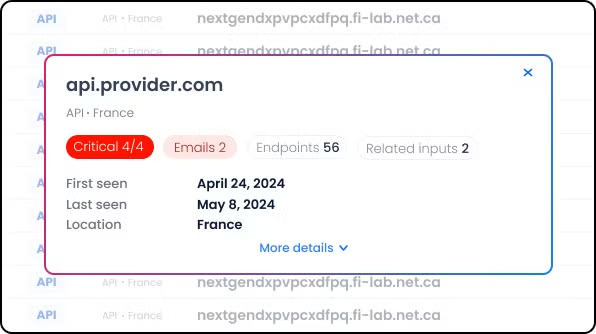
Delayed detection allows cybercriminals to monetize stolen credentials through account takeover attacks, escalate privileges within your network through lateral movement, or sell your data to multiple buyers on dark web marketplaces. Each day that passes increases the likelihood of follow-on attacks like ransomware deployment, business email compromise, supply chain infiltration, or targeted phishing campaigns against your employees.
Early detection changes the equation. When you identify dark web exposure quickly through proactive monitoring, you can reset compromised credentials before they’re weaponized, remove leaked data from circulation where possible, and shore up the security vulnerabilities that allowed the breach in the first place. It won’t undo the initial compromise, but it significantly limits the damage and reduces your overall cyber risk exposure.
How CybelAngel helps you stay ahead
CybelAngel continuously monitors dark web forums, encrypted messaging channels, and underground marketplaces for signs of your data, surfacing exposed credentials and threat actor discussions specific to your organization. The platform tracks over 11 million posts across more than 200 languages, delivering validated alerts that focus on what actually matters.
About the author