Every vendor is a vector: The 2026 supply chain risk report is here
Table of contents
Third-party breaches doubled as a share of all incidents in 2025.
They didn’t just expand, but rather they doubled.
97% of organizations experienced at least one supply chain breach last year, up from 81% in 2024. The average remediation cost when a breach originates from a vendor: $4.8M. And the average organization now works with 286 third-party vendors, up 21% year over year.
More vendors. More entry points. More exposure.
That is the context behind Every Vendor is a Vector, our new data-led guide to supply chain cyber risk and the case for modern third-party risk management (TPRM). It is built for security teams evaluating how to strengthen their third-party risk posture, and for the people who need to make the case internally for better tools, better processes, and better visibility across the vendor ecosystem.
Here is what is inside.
Learn why the threat environment has shifted permanently
Supply chain attacks are no longer exceptional events, they are now background noise.
The REACT team monitors vendor ecosystems across deep, dark, and open web sources every day. What we see consistently is this: most organizations have spent years hardening their own perimeter while attackers have moved on. The fastest route into an enterprise today is through your payroll provider, your logistics partner, your SaaS stack.
Manufacturing has been the number one ransomware target for four consecutive years. Financial services faces ongoing dark web trading of vendor credentials linked to major banks. Healthcare sits at the intersection of sensitive patient data and third-party billing systems with HIPAA exposure at every layer. The Qantas third-party breach exposed six million customer records. MOVEit compromised over 2,700 organizations and 93 million people through a single vendor tool.
That last shift, from exceptional to routine, is the one that should concern security teams most. Routine does not mean manageable. It means the baseline expectation has changed.
The regulatory picture is now personal
Compliance has always been part of the CISO role. What is genuinely different now is where the accountability lands.
Under NIS2, management bodies are explicitly responsible for compliance failures. That means personal liability and possible leadership bans, not just organizational fines. DORA requires senior leadership to maintain segregated ICT risk management frameworks. The SEC requires board-level cybersecurity governance disclosure, meaning the board, not just the security team, carries direct accountability for vendor risk.
Forrester projects that breach-related class-action costs will surpass regulatory fines by 50% in the coming year. The European Commission is actively pursuing 13 member states for late NIS2 transposition. Even governments are struggling with the timeline.
Waiting for regulatory clarity is not a strategy. CybelAngel’s regulatory compliance services help organizations understand exactly where they stand across NIS2, DORA, and GDPR obligations before enforcement arrives.
Why more TPRM spending is not solving the problem
95% of organizations increased their TPRM budgets in 2025, but did you know that 97% still got breached through their supply chain.
The problem is not investment. Rather it is program structure that is problematic.
How so you may ask?
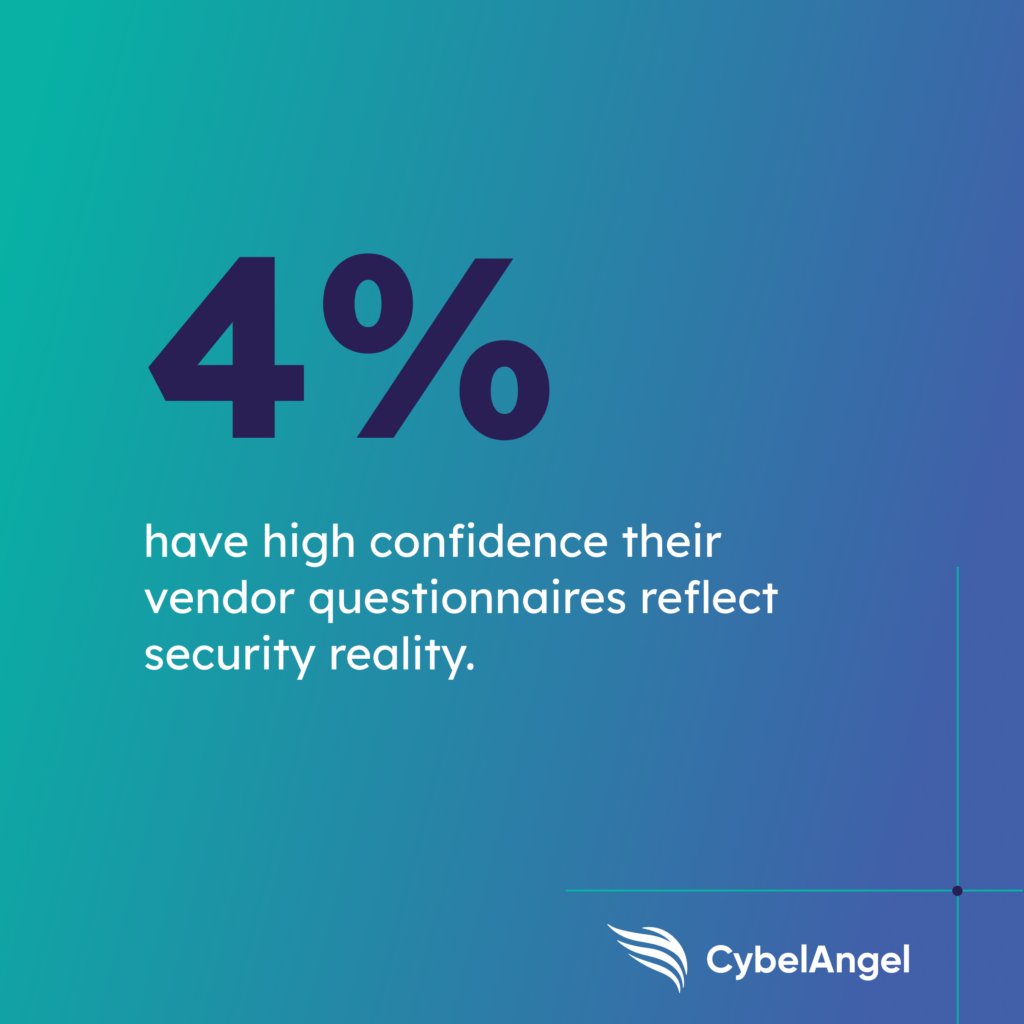
Most programs are built to satisfy compliance requirements. Annual vendor questionnaires. Point-in-time snapshots. Self-reported vendor posture. These tools were designed for a risk landscape that no longer exists.
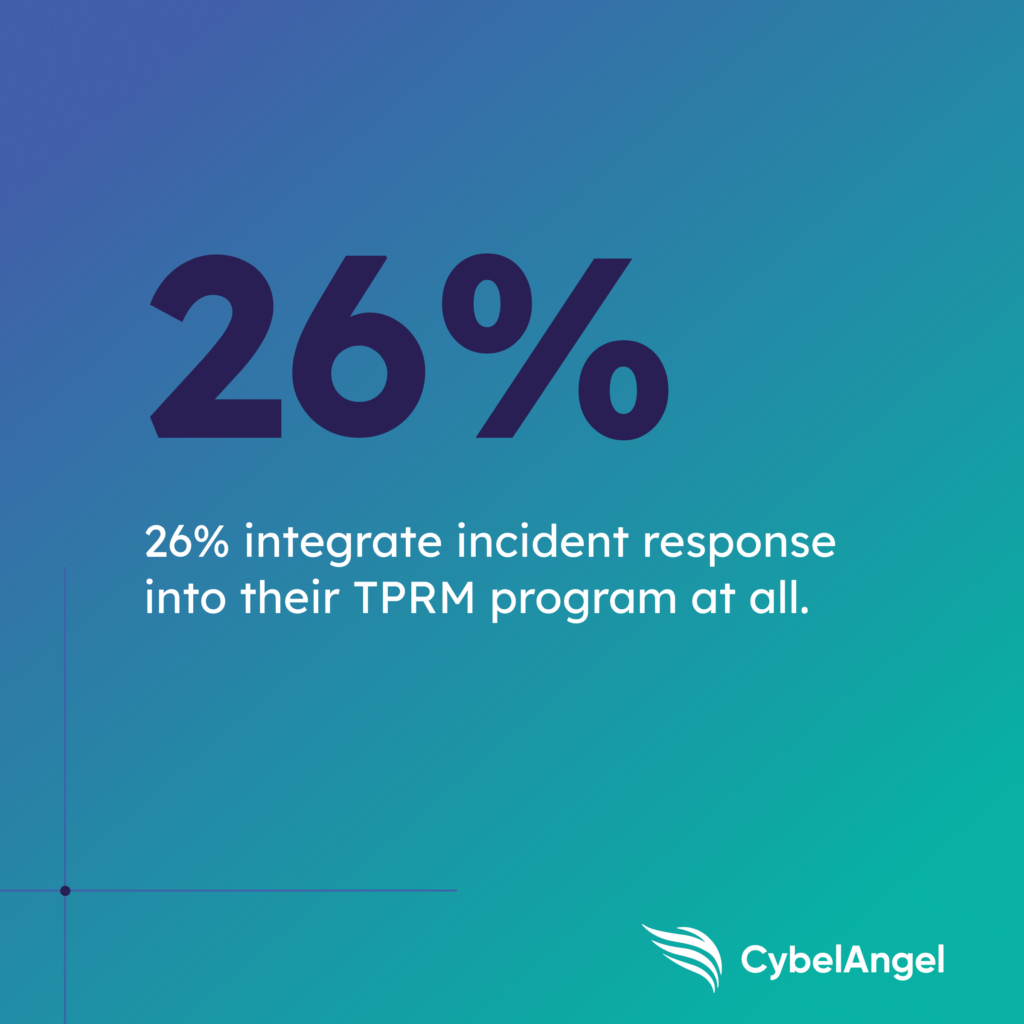
Effective third-party risk management programs do something different. They monitor continuously, not periodically. They tier vendors by actual risk, not contract size. They validate vendor claims with external threat intelligence, including dark web monitoring, leaked credential detection, and exposed asset discovery. They feed directly into the SOC. And they measure outcomes, not activity.
Organizations running risk-driven TPRM programs report 60 to 80% reduction in alert volume and 30 to 50% faster incident response when vendor compromises occur.
Shadow AI is the TPRM blind spot nobody is tracking
The biggest AI risk for most organizations is not their own deployment. It is the AI their vendors are running without disclosing it.
A vendor enabling AI features in your SaaS tool by default. A subcontractor using a generative AI tool to process your confidential deliverables. A cloud provider adding an AI analytics layer buried in updated terms of service.
In each case, your data moves through models you have not evaluated, in jurisdictions you have not reviewed, with retention policies nobody has agreed to. Only 37% of organizations have processes in place to assess AI tool security before deployment. For most TPRM programs, nth-party AI usage does not even appear on the assessment framework.
It is an emerging blind spot. And it is already a live risk. Understanding your attack surface now includes understanding what your vendors’ vendors are doing with your data.
What the report covers
Every Vendor is a Vector is structured in four parts. Part one maps the 2026 threat environment by industry and geography. Part two breaks down what NIS2, DORA, GDPR, SEC rules, and CMMC now require of your program and your leadership personally. Part three sets out six practices that separate programs that reduce risk from those that satisfy compliance. Part four covers shadow AI in the vendor ecosystem and what to do about it now.
The data tables and comparison frameworks inside are built to go directly into board briefings and business cases.
If your TPRM program was built for compliance, this report shows you what it needs to become.
FAQs
Third-party risk management is the process of identifying, assessing, and monitoring the cybersecurity risks introduced by vendors, suppliers, and service providers that have access to your systems or data. A mature TPRM program combines continuous external monitoring, tiered vendor assessment, and integration with your broader security operations function.
NIS2 requires critical and important entities across 18 sectors to conduct vendor risk assessments and implement explicit supply chain security measures. Crucially, it places personal liability on management bodies for compliance failures, meaning security leaders, not just organizations, face consequences including potential leadership bans if vendor risk is not managed adequately.
Nth-party risk refers to the security exposure that comes from your vendors’ vendors and subcontractors. Most TPRM programs assess direct suppliers but have no visibility into the extended supply chain. Some of the most significant recent breaches, including MOVEit, originated at the nth-party level. Effective programs require primary vendors to disclose material subcontractor dependencies and use external scanning to identify concentration risks.
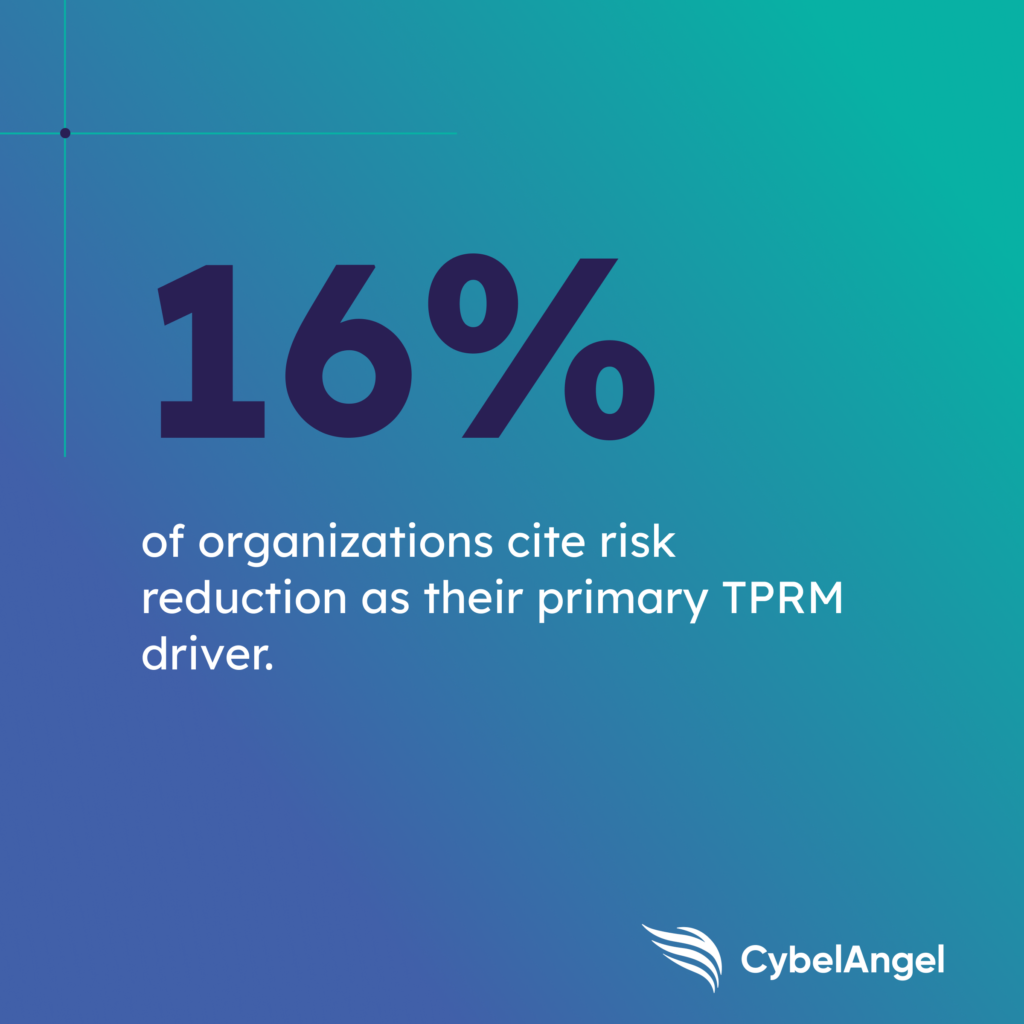
Compliance-driven TPRM is built around satisfying audit requirements: annual questionnaires, point-in-time assessments, self-reported vendor posture. Risk-driven TPRM is built around actually reducing the likelihood and impact of a vendor-originating breach: continuous monitoring, tiered assessment based on actual risk, external intelligence validation, and SOC integration. Only 16% of organizations currently cite risk reduction as their primary TPRM driver, which explains why 97% were breached via supply chain in 2025 despite increased spending.
CybelAngel’s comprehensive risk analysis services include third-party exposure assessments that go beyond questionnaires. Our REACT team monitors vendor ecosystems across deep, dark, and open web sources to detect credential exposures, dark web activity, and exposed assets linked to your supplier network before they become incidents. Talk to an analyst to see what your vendor ecosystem is exposing right now.
About the author