Understanding Google Dorks [Plus Risk Use Cases]

Table of contents
58% of ethical hackers use Google dorking as their first reconnaissance step, according to a survey of over 1,000 security professionals. They don’t need to breach a firewall or crack encryption.
They open Google, type the right query, and find what your organisation accidentally left exposed. This article covers how threat actors use dorking in documented attacks, and what your security team needs to do about it.
Interested instead in our 2026 cheat sheet? Find it here.
Why is Google Dorking important
In 2025, exploited vulnerabilities were the root cause of 32% of ransomware attacks. Dorking is how attackers identify those vulnerabilities before a patch is applied.
A common misconception is that cybercriminals must breach firewalls and bypass complex security to cause damage. The reality is often simpler. Attackers frequently start by looking for what’s already exposed. Google Dorking is their primary method for finding these accidental exposures.
It’s a game of digital cat and mouse played on the world’s largest search engine. By using specialized keywords for dorks, anyone can find:
- Evidence of exposed servers and databases.
- Intelligence on network configurations and software versions.
- Guidance on which assets are vulnerable and unpatched.
- Insight into sensitive documents, from financial reports to employee credentials.
This technique is crucial for attackers performing reconnaissance. It helps them map a target’s digital footprint and find the path of least resistance long before launching an actual attack. In the long run, understanding dorks is essential for building resilience against everything from data breaches to ransomware
Dork use cases examples that could evolve into something more risky
The following cyber scenarios show how simple Google searches have unfolded into major security incidents over the past two years. Some were caught by researchers, while others were exploited by criminals. All of them show how dorks expose critical vulnerabilities.
1. A logistics leak example
A security researcher could finds following dork filetype:sql site:example-logistics.com, with a complete SQL database backup file that a developer had accidentally left on a public-facing web server. The database contains thousands of customer records, shipping manifests, and internal credentials. The company had focused on securing its main application but missed a simple misconfiguration that indexed a sensitive backup. The discovery forced a costly incident response and a public disclosure that damaged its reputation.
What the security team should have done: run a recurring dork — filetype:sql site:yourdomain.com — against their own domain. Any result returned means Google has already indexed it, and so has every attacker running the same query.
2. A healthcare ransomware pathway example
A regional hospital network suffers a debilitating ransomware attack. Investigators traced the initial point of entry to an exposed Remote Desktop Protocol (RDP) portal.
The attackers used the search query inurl:/remote/login/ intitle:"RDP", a common dork for finding remote access gateways. They found the hospital’s login page, which was not protected by multi-factor authentication, and used brute-force methods to gain access. From there, they moved laterally across the network, deploying ransomware that crippled operations for weeks.
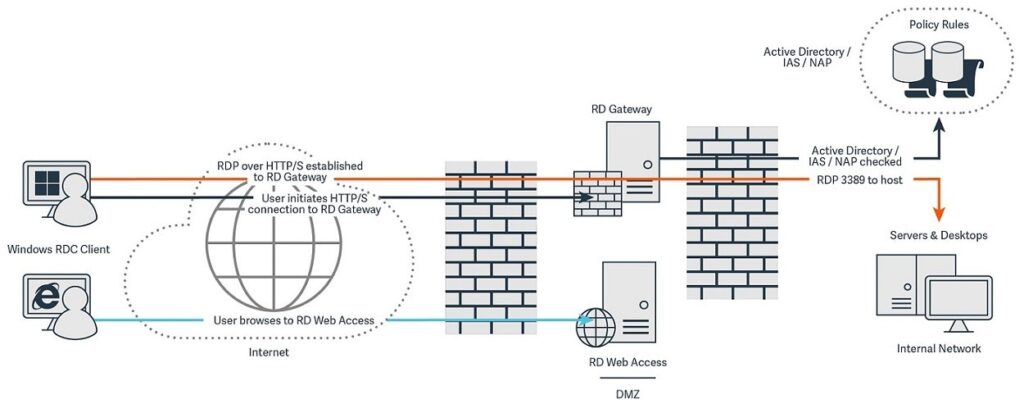
This scenario is not hypothetical. Data theft now occurs in 77% of ransomware intrusions (Google GTIG, 2026), up from 57% in 2024. Dorking for exposed RDP portals is one of the most automated reconnaissance techniques in active ransomware playbooks. Detection: run inurl:/remote/login/ site:yourdomain.com monthly. If it returns a result, that portal is visible to every attacker running the same search.
3. A sensitive project on a public server example
A promising tech startup develops a proprietary AI algorithm, codenamed “Project Chimera.” Then later that year a competitor mysteriously launched a product with remarkably similar features.
A forensic investigation then reveals the source of the leak: a public web directory. An engineer had uploaded project files to a staging server for testing, which was inadvertently indexed by Google. A rival firm, using the dork intitle:"index of" "Project-Chimera-Internal", found the directory and downloaded everything, including source code and research notes. The entire R&D investment was compromised without a single firewall being breached.
Detection: intitle:"index of" site:yourdomain.com will surface any publicly indexed directories on your domain. Run it quarterly. Any result is a critical exposure.
What is Google Dorking?
Now that you’ve seen the damage, let’s define the technique.
What is Google Dorking? Also known as Google Hacking, it is an advanced search technique that uses special operators to filter Google’s search results down to very specific information. These operators, often called dorks or cheat codes, tell Google to look beyond simple keyword matches and search within URLs, file types, or specific websites.
The technique was first widely documented in 2002 by security researcher Johnny Long, who created the Google Hacking Database (GHDB). This database is a collection of thousands of pre-made dorks that can be used to find vulnerabilities, sensitive data, and exposed systems. What started as a tool for security professionals has since become a staple in every hacker’s toolkit.
A Google dorking cheat sheet
For the full command reference, see our 2026 Google Dorks Cheat Sheet.
Does combining dorks ensure maximum impact?
Yes. The real power of dorking comes from combining these operators. For example, an attacker looking for usernames and passwords on a government website might use:
site:gov filetype:log intext:password
This query tells Google: “Search only on .gov domains for log files that contain the word ‘password’.” In seconds, Google returns a list of potential credential leaks that would be impossible to find otherwise.
A quick rundown of steps for your security teams to optimize Google Dorks
What are some ways you can seamlessly configure things on your own side?
- Build a dorking workflow: Define a process for regularly running dorks against your own domains to find potential leaks. Prioritize queries from the Google Hacking Database.
- Configure
robots.txtproperly: Use therobots.txtfile to instruct search engines which directories and files on your website should not be indexed. - Disable directory indexing: Configure your web servers to prevent them from displaying a list of files when a user visits a directory that doesn’t have an index page. This stops
intitle:"index of"attacks cold. - Audit public-facing assets: Maintain an inventory of all internet-facing servers, applications, and cloud storage. If you don’t know it’s there, you can’t protect it.
- Enforce strong access controls: Never rely on an obscure URL to protect sensitive information. Every asset should require authentication and authorization.
- Train your developers: Educate your engineering teams on the risks of hardcoding credentials, leaving debug modes on in production, or uploading sensitive files to public servers.
- Deploy an EASM solution: Automate your visibility. Use a platform like CybelAngel to get a persistent, outside-in view of your attack surface and detect exposures in real time.
FAQ
Interested in more of an overview?
What is Google Dorking? It is the process of using advanced search operators (dorks) to find specific information on Google that is not readily available through normal searches. This often includes sensitive files, exposed servers, and vulnerable web applications.
Is using Google Dorks illegal? The act of using Google Dorks itself is not illegal; you are simply using a search engine’s features. However, using dorks to access systems or files without authorization is illegal and constitutes a computer crime.
What are the most common keywords for dorks?
The most common operators, or keywords for dorks, are site:, filetype:, inurl:, and intitle:. These are often combined with search terms like “password,” “confidential,” “admin,” or “login.”
How can I find a Google Dorking cheat sheet?
The Google Hacking Database (GHDB) is the most comprehensive resource, containing thousands of dorks for various purposes. Many cybersecurity websites also publish condensed cheat sheets with the most essential commands.
How do hackers use dorks?
Hackers use dorks for reconnaissance. They automate searches to find low-hanging fruit like exposed login pages, unpatched software, open server directories, and leaked credentials. It’s their first step to map a target’s weaknesses.
How can I protect my company from Google Dorking?
Protection involves a combination of proper server configuration (like disabling directory indexing), careful data management, and proactive monitoring. Using an External Attack Surface Management (EASM) platform is the most effective way to automate the detection of these exposures.
Wrapping up
The most damaging reconnaissance attacks don’t announce themselves. A threat actor running automated dork queries against your domain costs them nothing and takes seconds. The Exploit Database alone holds over 3,500 pre-built dork queries — none of which require technical expertise to run. Your exposure is only invisible until someone looks.
CybelAngel’s outside-in scanning runs these checks continuously, so you find what attackers find before they act on it. See what’s exposed right now.
About the author