What Is Doxxing? How Executives Are Targeted and How to Stop It
Table of contents
Executive targeting incidents doubled in 2025, reaching their highest level on record — and the acceleration is continuing into 2026. The Security Executive Council tracked a 313% increase in total incidents between 2023 and 2025, describing it as ‘a hockey stick, it goes along and then just rockets up.’
This guide covers how executive doxxing attacks are built, what the consequences look like, and the controls security teams use to detect and respond before damage is done.
1. What is doxxing and swatting?
What is doxing? And how does it differ from swatting? Here’s a quick rundown of swat vs dox meanings:
- Doxed meaning: Doxxing (short for ‘document tracing’) involves collecting and publishing someone’s private information online without consent, such as their financial information or social security numbers.
- Swatted meaning: Swatting is a form of doxxing where a false report is made to law enforcement, sending a SWAT team to the victim’s home address and creating a potentially life-threatening situation.
Doxxing can be perpetuated by abusers wanting to intimidate their victims, stalkers of famous celebrities, or cybercriminals wanting to damage a company’s reputation, for example.
How does doxxing work?
While it can happen in various ways, doxxing typically involves several steps that perpetrators use to gather, share, and exploit sensitive data.
Step 1: Gathering the information
There are lots of ways that doxers can gather information about their victims, including:
- Social media scraping: Social media platforms like Facebook, Instagram, and LinkedIn often contain a wealth of personally identifiable information (PII), including photos, locations, phone numbers, and details about personal relationships.
- Public records and databases: Information from public databases, such as voter registration, property ownership records, and court documents, can often be accessed online.
- Data breaches: When a company’s database is compromised, personal information such as email addresses, passwords, phone numbers, and even credit card information can be leaked.
- Social engineering: A doxer could use phishing emails or other impersonation tactics to persuade someone to share valuable information about themselves.
- People search engines: Websites like Spokeo, Whitepages, and Pipl collect and sell personal data, including addresses, phone numbers, and employment details.
- Reverse lookup services: Doxers can track the owner of a particular image or phone number to gather more information.
Step 2: Posting the information
Once the information is compiled, doxers can share it on open docs, public platforms, or anywhere else they choose, including:
- Social media platforms: Doxxers can publicly share the victim’s personal details on platforms like Twitter, Reddit, or Facebook, and tag the victim’s friends or family members to increase the exposure.
- Doxxing websites: Some websites are specifically designed to host doxxed information, and they often have large followings.
- Forums and online communities: Platforms like 4chan other anonymous forums are known for being hotspots for doxxing activities.
2. Is doxing a crime?
It depends on the jurisdiction, but generally, doxxing can be viewed as a crime. It’s a malicious act that can lead to online harassment, identity theft, ruined reputations, and psychological distress for its victims and their family members.
The consequences of doxing include:
- Harassment and threats: Victims often face relentless online harassment, including abusive messages, spam calls, and threats to their safety.
- Reputation damage: Doxxing can tarnish a person’s personal or professional reputation, especially if false or harmful information is shared.
- Emotional distress: The exposure of private details can lead to anxiety, fear, and emotional trauma, affecting mental health.
- Physical danger: In extreme cases, doxxing can lead to stalking, swatting, or even physical attacks, endangering lives.
- Financial loss: If sensitive information like bank account details or credit card numbers is exposed, victims may suffer identity theft or financial fraud.
- Professional consequences: Public exposure of controversial opinions, past mistakes, or private details can jeopardize careers or business relationships.
What are some doxxing laws?
There are lots of laws across the world that could apply to doxers, including:
The UK’s Malicious Communications Act (1988)
Under this law, sending threatening, offensive, or false messages with the intent to cause distress or anxiety is a criminal offense. Doxxing can fall under this category if someone publishes private details online with malicious intent, resulting in harm or distress to the victim.
Australia’s Cybercrime Act (2001)
Australia’s Cybercrime Act includes provisions related to online harassment and privacy breaches. It criminalizes the use of telecommunications or data networks to intentionally harm others, including posting personal details online without consent.
The EU’s General Data Protection Regulation (2016)
While not specifically a “doxxing law,” the GDPR provides strong protection for personal data. It requires organizations to handle personal data securely and gives individuals the right to request the removal of their data if it is publicly exposed or mishandled. Doxxing could violate GDPR provisions, and those responsible can face heavy fines.
The Interstate Doxxing Prevention Act (2015-16)
American Congress has introduced a law that criminalizes the intentional publication of someone’s personal information online with the intent to harass, intimidate, stalk, or harm them. This law provides penalties for offenders, including possible jail time of up to five years.
3. What are some recent doxxing use cases?
Let’s look at some real-life examples of doxing in action, with devastating (and sometimes tragic) consequences.
When Fortune 500 executives were mass-doxxed
In May 2025, a site called luigiwasright.com — and its clone theceodatabase.com — published full names, business emails, mobile numbers, compensation details, and LinkedIn profiles of hundreds of Fortune 500 executives. The sites were live for less than 24 hours, but the data was archived and remains indexed. Security teams that detected the exposure within hours were able to begin removal requests while the window was open. Teams that found out later are still dealing with the indexed versions. In 2026, the gap between first exposure and first exploitation is measured in hours, not days.
When law enforcement was exposed…
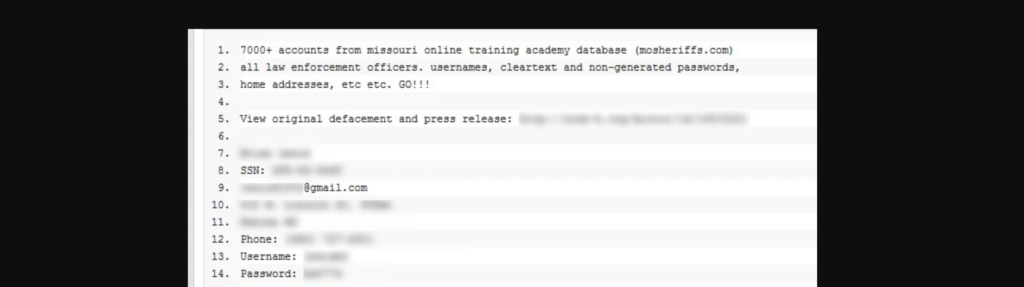
In 2011, the online coalition called Anonymous leaked the data of law enforcement officers from across America, allegedly in retaliation for police violence at a series of recent protests.
When JK Rowling was a target…
In 2021, JK Rowling accused three protesters of sharing a photo of her Edinburgh address on Twitter, by “carefully positioning themselves” to display it. Her mansion is also listed on Wikipedia.
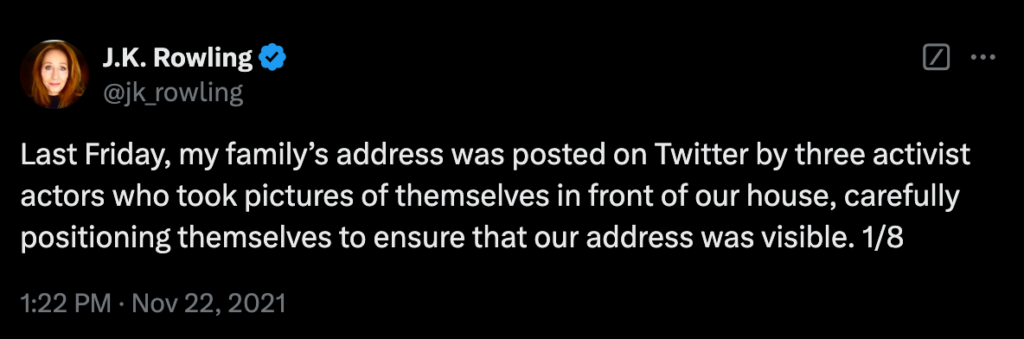
JK Rowling’s tweet in response to the photo outside her home. Source.
When a swat attack had tragic consequences…
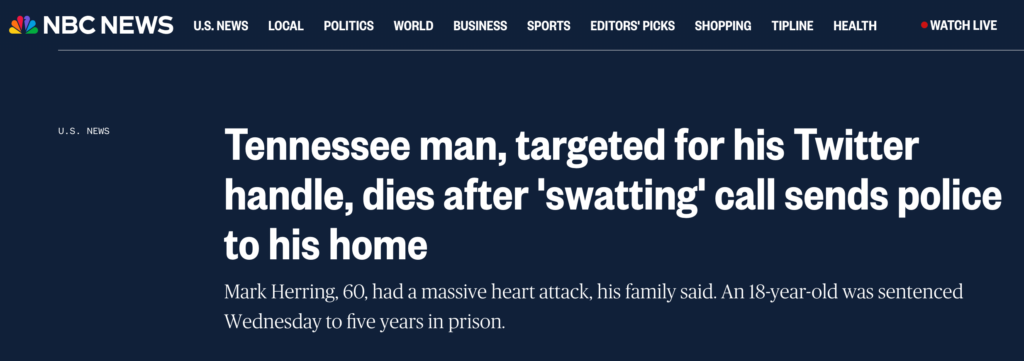
After a dispute over a Twitter handle, a swatter then reported a fake murder at a 60-year-old man’s home. Tragically, the man died of a heart attack when law enforcement surrounded his home with guns drawn.
When X/ Twitter lost their users’ data…
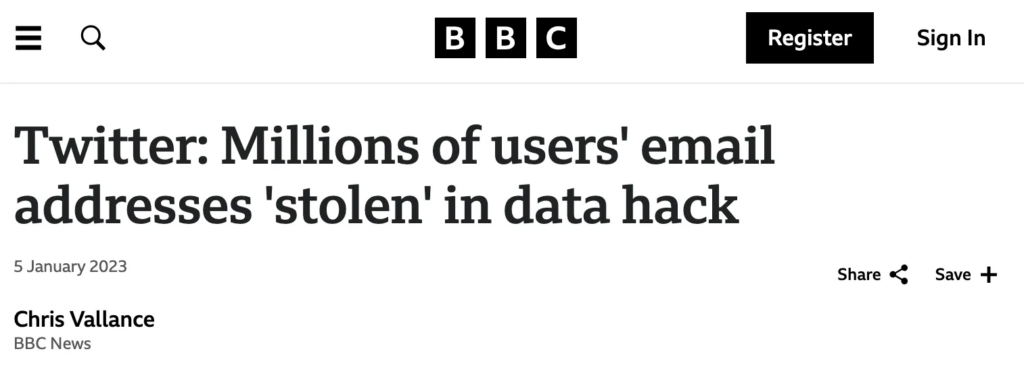
In 2023, hackers posted the data of 200 million Twitter users on a forum for free, with experts saying it would, “lead to a lot of accounts getting hacked, targeted with phishing, and doxxed.”
When a doxxing site suffered…
In an ironic twist in 2022, the doxxing website Doxbin[.]com was targeted by a threat actor and suffered a leak of its own. Illicit forums are often subject to infighting and retaliatory actions against each other.
4. How to avoid getting doxxed
Doxxing campaigns follow a recognisable pattern: personal information is first shared in small, closed communities, private forums, encrypted channels, fringe platforms — before spreading to mainstream sites. By the time it appears on Twitter or Reddit, it has already gained momentum and the window for quiet intervention has closed.
Detection step: Monitor paste sites, dark web forums, and Telegram channels for your executives’ names, email addresses, and home locations. A mention in a closed forum today is typically a public post within 48–72 hours.*
Detection step: Run a quarterly OSINT audit on your top five executives — search their name combined with their home city, employer, and personal email across data broker sites, people-search engines, and Google. Any result surfacing a home address or family member’s name is data an attacker can use for a targeting package.*
Detection step: Alert your executives’ personal email providers and social platforms to enable login notifications. Doxxing attacks often begin with account compromise — harvesting the inbox for personal details before any public exposure occurs.”
Bonus: Invest in brand protection
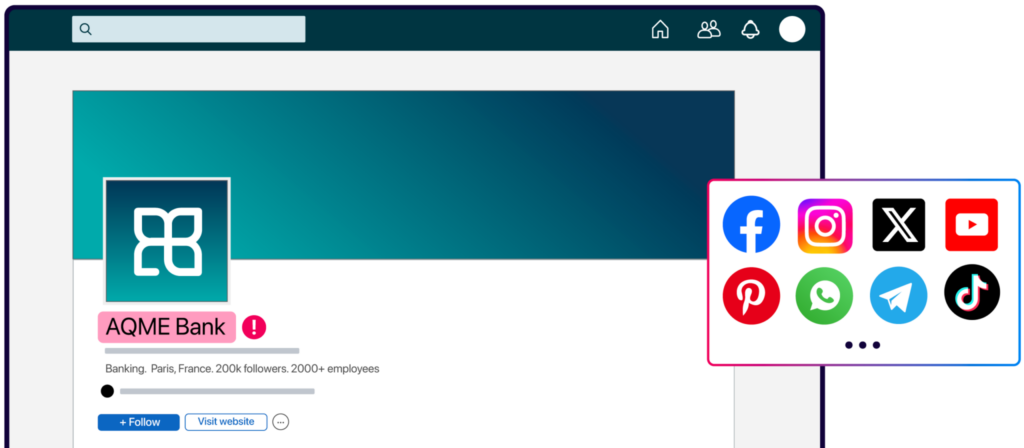
Brand protection services, like those offered by CybelAngel, play a crucial role in safeguarding your personal information and your company’s reputation.
CybelAngel’s comprehensive brand protection solutions include safeguarding against social media and app impersonation, domain protection, and dark web fraud.
Brand protection can fight against:
- The spread of false information
- Reputational damage
- The risk of swatting incidents or harassment
Through continuous monitoring, CybelAngel can detect when your personal or company information is being shared or sold on unauthorized websites, giving you the chance to intervene before the damage escalates.
5. Can you check if you’ve been doxxed on any websites?
Yes—but it can be time-consuming. One of the easiest ways is to search for your name, address, email, and other personal details on popular pages, doxxing websites, and social media platforms.
Some services, like the ones offered by CybelAngel, can automatically monitor the web and alert you if your information appears on any known data leak platforms, dark web pages, or doxxing forums.
6. What to do if you get doxxed
If you do find that you’ve been doxed, it’s important to act quickly. Here are the immediate steps you should take:
- Remove the information: Contact the websites and platforms where your information has been posted. Many websites will allow you to request the removal of personal data. If the platform refuses, take screenshots as proof, escalate the issue, and consider seeking legal assistance.
- Notify authorities: If you feel threatened, or if your information was shared with malicious intent, contact local law enforcement. If the doxxing escalates into threats of violence, whether by emails, phone calls, or otherwise, it’s important to report it immediately.
- Engage cybersecurity experts: If you’re a business or public figure, work with cybersecurity professionals to identify how your information was exposed and mitigate the damage. This can include removing data from data brokers and service providers, securing your social media accounts and network, and implementing brand protection services.
Wrapping up
Executive doxxing rarely announces itself. The data is assembled quietly, shared in closed channels first, and by the time it reaches mainstream platforms the attack is already in motion. CybelAngel monitors dark web forums, paste sites, and closed channels continuously — alerting security teams when executive personal data appears, before it can be weaponised.
Read our latest US centric guide, US Doxxing Laws: What Protection Actually Exists and Where Legal Remedies Fall Short, here.
About the author